
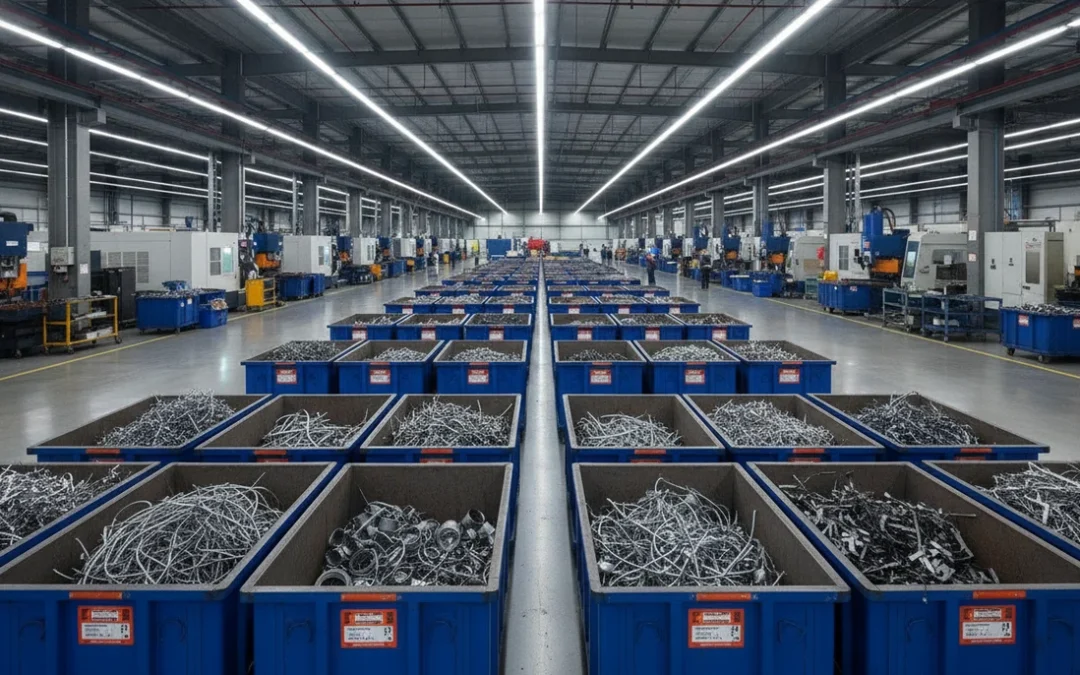
Scrap metal is a normal part of manufacturing. Steel offcuts, aluminum remnants, copper wire, rejected components, worn equipment, and other metals can accumulate every day. The question is whether those materials become an operational problem or part of a structured recycling program.
For Georgia manufacturers, a well-designed scrap metal recycling program can help keep production areas organized, reduce unnecessary waste, and recover value from materials that are already being generated. Instead of waiting for scrap to pile up and arranging removal at the last minute, manufacturers can establish collection systems and recurring pickups around their normal production schedules.
Olympus Recycling works with manufacturing facilities throughout Metro Atlanta, Gainesville, and North Georgia to build commercial and industrial recycling programs around the way each facility actually operates.
What Is a Manufacturing Scrap Metal Recycling Program?
A manufacturing recycling program is an ongoing system for collecting, separating, storing, and removing recyclable metals from a facility.
Unlike one-time warehouse cleanouts or equipment removal projects, these programs are designed for companies that consistently generate scrap. The recycling provider works with the facility to understand what materials are produced, how quickly they accumulate, where they can be collected, and how frequently they should be removed.
For one manufacturer, that might mean a roll-off container dedicated to steel scrap. Another facility may need separate collection methods for aluminum, copper, stainless steel, and electric motors. High-volume operations may require multiple containers and regularly scheduled exchanges.
There isn’t one recycling setup that works for every plant. A good program should be built around the facility.
Why Manufacturing Scrap Requires a Structured Approach
Manufacturing scrap can accumulate surprisingly quickly. A fabrication operation producing a relatively small amount of scrap during each production cycle can still generate significant volume over the course of a week or month. Without a defined collection process, materials can begin occupying floor space, loading areas, or outdoor storage locations.
That creates inefficiency. Employees may spend time moving scrap multiple times before it leaves the facility. Containers can become overloaded. Valuable metals can get mixed together or placed in general waste. Facility managers may also find themselves repeatedly arranging last-minute pickups.
A structured program creates a predictable destination for recyclable materials as soon as they’re generated.
When employees know where steel, aluminum, copper, and other scrap belong, the recycling process becomes part of normal production rather than an additional task.
What Metals Can Manufacturers Recycle?
The exact material stream depends heavily on what a facility manufactures and how its production processes work.
Steel is common in fabrication and industrial manufacturing and can include sheet metal, structural components, offcuts, defective parts, and other production scrap. Manufacturers can generate substantial quantities of steel, making volume and efficient removal particularly important.
Aluminum scrap may come from sheet, extrusion, machining, fabrication, and manufacturing processes. Copper can be recovered from electrical wire, equipment, motors, and other components, while brass and stainless steel may be found in specialized manufacturing operations.
Olympus Recycling can also handle materials such as electric motors, compressors, radiators, wire, cable, and other recyclable industrial metals.
Separating materials where practical can make a manufacturing recycling program more efficient and help businesses better understand the value of the different scrap streams their operations produce.
How Roll-Off Containers Support Manufacturing Operations
For facilities generating substantial quantities of scrap, roll-off containers provide a convenient way to collect metal without repeatedly transporting it away from the plant.
Olympus Recycling offers 20-yard, 30-yard, and 40-yard roll-off options for appropriate commercial and industrial applications. The best container isn’t necessarily the largest one. Scrap type, weight, available space, loading equipment, and pickup frequency all influence which option makes sense.
Heavy steel, for example, can reach transportation weight considerations long before a large container appears full. Lighter materials may require more volume before transportation becomes necessary.
Some manufacturing and warehouse environments may also benefit from trailers or other collection options, particularly when forklifts and loading docks are part of the operation.
Rather than choosing equipment based solely on container capacity, Olympus Recycling can help evaluate the material stream and recommend a setup appropriate for the facility.
How Recurring Scrap Metal Pickup Works
Once collection equipment is in place, the next question is how frequently the scrap should be removed. A manufacturer producing high volumes of metal may need regular pickups or container exchanges. Another facility might require service less frequently. Production cycles, seasonal demand, major contracts, equipment upgrades, and facility expansions can all change the amount of scrap generated over time.
Recurring commercial scrap metal pickup creates consistency without requiring facility managers to start from scratch every time material needs to leave the property.
Olympus Recycling can coordinate an ongoing pickup schedule based on the needs of the operation. When production changes, the recycling program can be adjusted accordingly.
That flexibility is particularly important for growing manufacturers. A recycling setup that worked when a facility was producing at half capacity may not be adequate after production increases.
Can a Recycling Program Improve Manufacturing Efficiency?
The value of industrial recycling goes beyond the scrap payout.
An organized collection program can reduce the number of times employees handle the same material. Scrap moves from production into its designated collection point and eventually leaves the facility, rather than being temporarily relocated again and again.
That can free up valuable floor and storage space while making production and loading areas easier to manage.
Reliable pickups also reduce the risk of containers becoming a bottleneck. When scrap removal is coordinated with production, facilities are less likely to find themselves with nowhere to put newly generated material.
Recycling can also turn an expense into a potential revenue stream. Instead of sending recyclable metal out as general waste, businesses can recover value based on the material, weight, quality, and current scrap market.
Because commodity markets fluctuate, scrap metal payouts change over time. Olympus Recycling can provide current information based on the materials your facility generates.
Supporting Manufacturing Sustainability Goals
Recycling also plays an important role in reducing manufacturing waste.
Metals such as steel, aluminum, copper, and stainless steel can be returned to the material supply chain rather than occupying landfill capacity. For manufacturers working toward waste-diversion, resource-efficiency, or broader sustainability objectives, establishing a consistent metal recycling process is a practical place to start.
More importantly, recycling can become an ongoing operational practice rather than a one-time sustainability initiative.
When containers, processes, and pickups are already integrated into the facility, employees don’t have to reinvent the process every time scrap is generated.
Build a Custom Industrial Recycling Program with Olympus Recycling
Manufacturers don’t need another vendor that only shows up when there’s something to haul. Businesses generating scrap continuously need a recycling partner that understands their operation.
Olympus Recycling develops custom industrial recycling programs for manufacturing facilities in Atlanta, Gainesville, and throughout North Georgia. We can evaluate your scrap streams, recommend collection equipment, coordinate recurring pickups, and adjust service as your operation changes.
Whether your plant generates steel every day, accumulates high-value non-ferrous metals, or needs a better system for managing several types of industrial scrap, we’ll help build a solution around your facility.
Ready to Improve Your Manufacturing Scrap Program?
Talk with Olympus Recycling about your current scrap volume, materials, production schedule, and collection challenges. We’ll help determine whether roll-off containers, trailers, commercial pickup, or a customized combination of services makes the most sense.
Contact Olympus Recycling today to learn more about our Industrial Recycling services and build a recurring scrap metal recycling program around your manufacturing operation.